 WhatsApp
New production lines
-
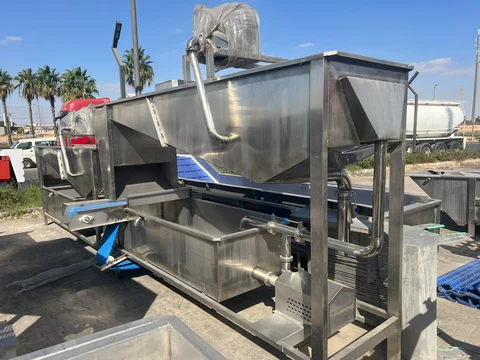
Strawberry Washing Line – 3 Tons/Hour
Strawberry Processing Line
Strawberry Washing Line – Designed and Manufactured by Al-Hindasiya Production Capacity: 3 to 3.5 Tons per Hour Line Description Al-Hindasiya General Supplies designs and manufactures an integrated industrial strawberry washing line with a production capacity ranging from 3 to 3.5 tons per hour, taking into consideration the delicate nature of strawberries and the specific handling requirements throughout the washing and preparation stages. The line is designed with a multi-stage operating system that begins with the removal of initial impurities and foreign materials, followed by washing and rinsing operations using bubble washing systems and water pumping, before proceeding to product drainage and sorting. The design focuses on minimizing direct manual handling during product transfer between processing stages and reducing unnecessary pressure and friction on the fruit, helping preserve its shape and quality while minimizing the risk of bruising or damage. Processing Stages Stage 1: Preliminary Impurity and Foreign Material Removal The process begins with receiving the strawberries and carrying out an initial cleaning stage to remove impurities and unwanted foreign materials. The product is then transferred by conveyor to the next washing stage. Stage 2: Effective Primary Washing The product enters the primary washing unit, which operates using a bubble washing system combined with pump-driven water circulation. This creates water movement that helps remove soil, dust, and impurities adhering to the surface of the strawberries. The product is propelled and transferred by water flow without requiring manual handling between washing stages, helping minimize direct contact with the fruit. Water Collection, Filtration and Recirculation System Water discharged from the washing stage is collected in a dedicated lower section, where it passes through a filtration system designed to separate leaves, impurities, processing residues, and suspended organic matter. After filtration, the water is pumped back to the first washing stage for reuse within the washing cycle. This system helps reduce the accumulation of impurities in the water and improves overall operating efficiency. Stage 3: Final Washing and Rinsing The product continues to the next washing stage, where additional washing and rinsing are performed using bubble agitation and water circulation through a dedicated pump, with lukewarm water used for rinsing according to the operating design. The multiple washing stages help improve the removal of remaining impurities before the strawberries proceed to the sorting section. Stage 4: Water Draining and Sorting After completing the washing and rinsing operations, excess water is separated from the product before it is transferred to the final sorting conveyor. The sorting section consists of upper roller units and a conveyor belt approximately 6 meters long. This arrangement helps drain residual water and provides a suitable working area for manual inspection and sorting of the strawberries before they proceed to subsequent processing stages. Technical Specifications Item Specification Machine Name Strawberry Washing Line Design and Manufacturing Designed and Manufactured by Al-Hindasiya General Supplies Production Capacity 3 to 3.5 Tons per Hour Product Strawberries Processing Stages Preliminary Impurity Removal, Washing, Rinsing, Draining and Sorting Washing System Bubble Washing and Pump-Driven Water Circulation Rinsing System Bubble Agitation and Water Pumping with Lukewarm Water Product Transfer System Water-Assisted Transfer and Conveyor Systems Water Treatment System Water Collection, Filtration and Recirculation Sorting Unit Sorting Conveyor Equipped with Upper Rollers Sorting Conveyor Length Approximately 6 Meters Application Strawberry Preparation and Washing Before Further Processing, Freezing or Packaging Technical and Operational Features Designed to accommodate the delicate nature of strawberries during washing and handling operations. Product feeding and transfer system that minimizes the need for direct manual handling. Bubble washing and pump-driven water circulation to improve impurity removal efficiency. Multiple washing and rinsing stages to achieve effective cleaning before sorting. Integrated water collection and filtration system to separate leaves, impurities, and organic processing residues. Water recirculation after filtration to support operational efficiency and optimize water consumption. Final draining stage to remove excess water before the next production stages. 6-meter sorting conveyor providing a suitable area for product inspection and sorting after washing. Production capacity suitable for integration with IQF freezing lines or packaging operations, depending on the operating capacity of the connected equipment. Design, Quality and Food Safety The line has been developed with consideration for food-processing requirements and the delicate characteristics of strawberries. Special attention is given to product transfer paths, water circulation systems, and filtration arrangements to help minimize the accumulation of organic matter and impurities within the washing cycle. The design takes into account relevant Egyptian standard specifications, hygienic food-processing practices, industrial safety requirements, and applicable requirements of the National Food Safety Authority (NFSA), according to the intended application and processing requirements.
View details -
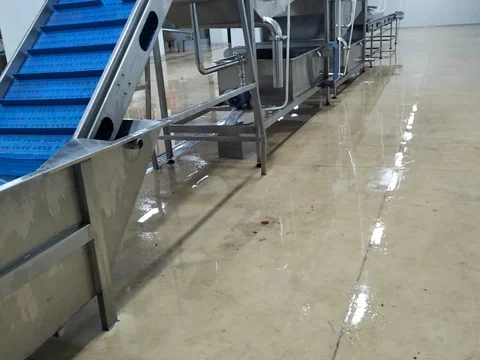
Strawberry Washing Line –5 Tons/Hour
Strawberry Processing Line
Strawberry Washing Line – Designed and Manufactured by Al-Hindasiya Production Capacity: 5 Tons per Hour Line Description Al-Hindasiya General Supplies designs and manufactures an integrated industrial strawberry washing line with a production capacity of 5 tons per hour, taking into consideration the delicate nature of fresh strawberries and their specific handling requirements throughout the washing and preparation stages. The line is designed with a multi-stage operating system to remove initial impurities and foreign materials, followed by washing and rinsing operations using air bubble systems and water circulation pumps. The process continues through product dewatering and sorting before the strawberries proceed to subsequent processing stages. The design focuses on minimizing direct manual handling during product transfer between processing stages and reducing unnecessary pressure and friction on the fruit, helping preserve its shape and quality while minimizing the risk of bruising or damage. Processing Stages Stage 1: Initial Feeding and Impurity Removal The process begins with receiving fresh strawberries and carrying out an initial cleaning stage to remove impurities and unwanted foreign materials. The product is then transferred by conveyor belt to the first washing stage. Stage 2: Primary Washing Unit – Effective Initial Washing The primary washing unit represents the first washing stage. It operates by combining air and water to generate an air bubble washing system, helping move and guide the strawberries through the washing tank without direct manual handling. The washing process is carried out using an air blower installed above the washing unit, which generates air bubbles inside the water, together with a water pump located at the beginning of the washing stage. The pump creates water flow that propels the product and directs its movement from the beginning to the end of the tank. The interaction between the strawberries, moving water, and air bubbles helps loosen and remove soil, organic residues, and impurities adhering to the fruit surface. These contaminants may originate from field growth and ripening, as well as harvesting, handling, and preparation operations. At the end of the washing stage, excess water is drained from the product before it is transferred to the secondary washing unit. Meanwhile, the used water is directed to the filtration system to separate leaves, impurities, and suspended organic matter. Water Collection, Filtration and Recirculation System – Primary Washing Unit Used water is collected in a dedicated lower section and passed through a filtration system to separate leaves, impurities, processing residues, and suspended organic matter. After filtration, the water returns to the designated lower collection tank, from where it is pumped back into the washing unit. This creates a closed-loop water recirculation system, with fresh water added to compensate for water losses according to operating requirements. Stage 3: Secondary Washing Unit – Rinsing and Removal of Residual Impurities The secondary washing unit receives the product transferred from the primary washing unit and is designed to complete the cleaning process by removing residual soil, impurities, and organic residues that may remain attached to or accumulate on the strawberries after the first washing stage. The secondary washing unit operates using the same working principle as the primary washing unit, combining air and water to generate air bubbles that help move the product and complete the washing and rinsing process without direct manual handling. The unit is equipped with an air blower installed above the washing tank to generate air bubbles, in addition to a water pump that drives the product forward and creates water movement inside the tank, improving rinsing efficiency and helping remove remaining impurities. This stage further enhances strawberry cleanliness and overall washing efficiency, targeting an impurity removal efficiency of approximately 80%, depending on the condition of the incoming product and operating conditions. Water Collection, Filtration and Recirculation System – Secondary Washing Unit The secondary washing unit is also equipped with an independent system for collecting and filtering the used water. The water is directed to a filtration unit that separates leaves, impurities, and suspended organic matter. After filtration, the water returns to the lower collection tank, where it is pumped back into the washing unit through the water pump, creating a continuous water recirculation cycle. Fresh water is added as required to compensate for water losses during operation. Stage 4: Dewatering and Sorting Conveyor After completing the washing and rinsing process in the secondary washing unit, the product is transferred to the dewatering and sorting conveyor, where excess water remaining on the strawberries is removed while providing a suitable working area for manual inspection and sorting. The sorting conveyor is approximately 8 meters long and is equipped with overhead air blower units that help remove residual surface water and further prepare the product before it proceeds to subsequent processing stages. Water collected during the dewatering process is also directed back to the water filtration and recirculation system, in accordance with the line's water circulation design. Technical Specifications Item Specification Machine Name Strawberry Washing Line Design and Manufacturing Designed and Manufactured by Al-Hindasiya General Supplies Production Capacity 5 Tons per Hour Product Fresh Strawberries Processing Stages Initial Feeding, Primary Washing, Secondary Washing and Rinsing, Dewatering and Sorting Washing System Air Bubble Washing and Water Pumping Bubble Generation System Overhead Air Blower Rinsing System Air Bubbles and Water Pumping, with Lukewarm Water Product Transfer System Water-Assisted Transfer and Conveyor Systems Water Treatment System Water Collection, Filtration and Recirculation Dewatering and Sorting Unit Sorting Conveyor Equipped with Overhead Air Blower Units Sorting Conveyor Length Approximately 8 Meters Application Strawberry Preparation and Washing Before Further Processing, Freezing or Packaging Technical and Operational Features Designed to accommodate the delicate nature of strawberries during washing and handling operations. Product feeding and transfer system that minimizes direct manual handling. Air bubble washing and pump-driven water circulation to improve impurity removal efficiency. Multiple washing and rinsing stages to achieve effective cleaning before sorting. Independent water collection and filtration systems for the washing stages. Water recirculation after filtration to support operational efficiency and optimize water consumption. Designed to reduce the accumulation of leaves, impurities, and organic matter within the water circulation system. An 8-meter dewatering and sorting conveyor equipped with overhead air blower units to help remove excess surface water. Suitable working area for manual inspection and sorting after washing. Production capacity suitable for integration with IQF freezing lines or packaging operations, depending on the operating capacity of the connected equipment. Design, Quality and Food Safety The line has been developed with consideration for food-processing requirements and the delicate characteristics of strawberries. Special attention is given to product transfer paths, water circulation systems, and filtration arrangements to help minimize the accumulation of organic matter and impurities within the washing cycle. The design takes into account relevant Egyptian standard specifications, hygienic food-processing practices, industrial safety requirements, and applicable requirements of the National Food Safety Authority (NFSA), according to the intended application and processing requirements. Al-Hindasiya General Supplies – Integrated Industrial Solutions for Food Processing and Manufacturing Lines.
View details
 WhatsApp